Preconception Nutrition
Trying to Conceive? Why Preconception Nutrition Matters Before Pregnancy
Pregnancy does not begin with a nutritional blank slate. Learn how the months before conception can help you assess nutrient status, strengthen daily habits, and prepare for the demands of pregnancy.
How to assess nutrient status, replenish key nutrients, and prepare for pregnancy before the positive test.
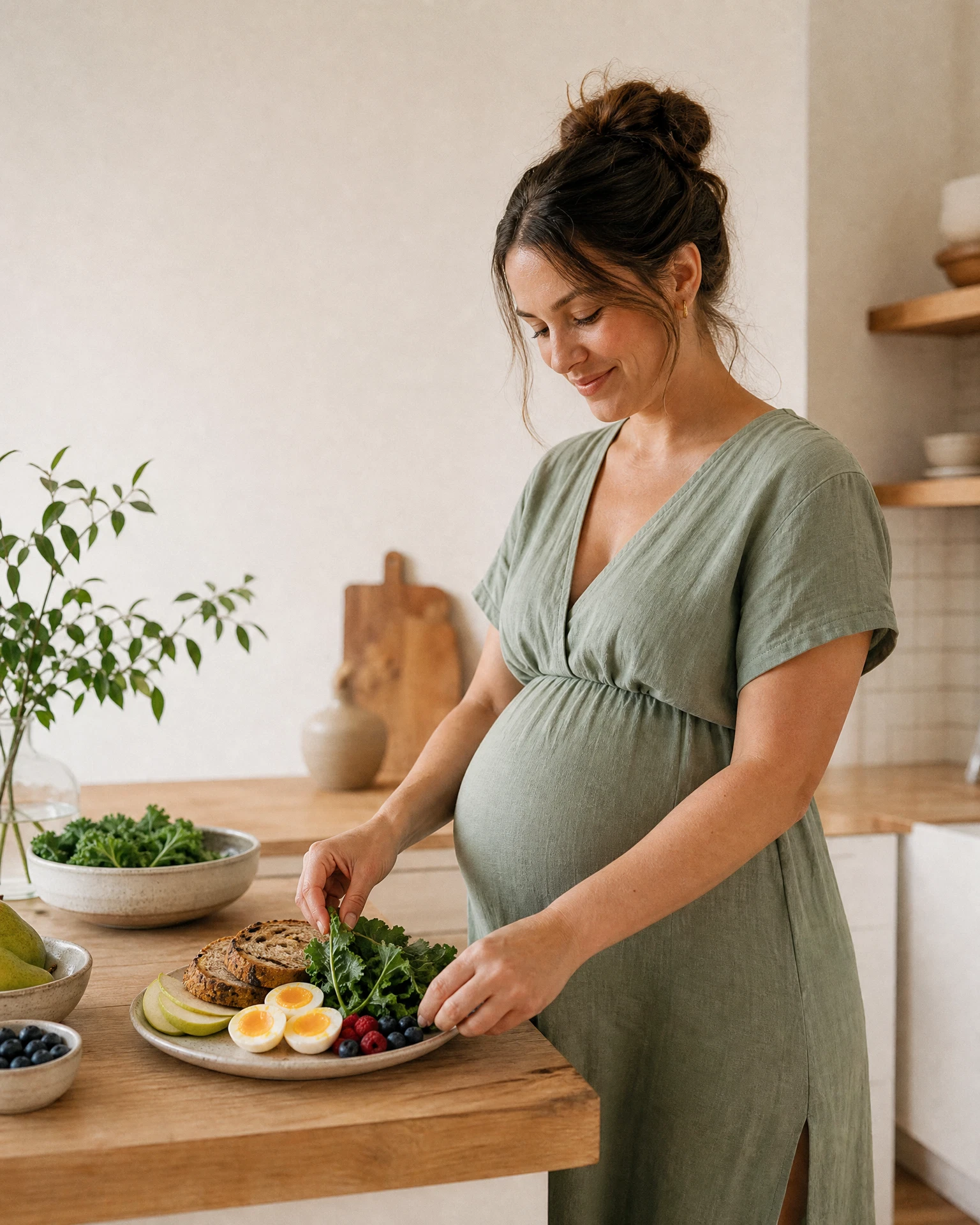
Preconception nutrition creates time to assess, replenish, and build habits before pregnancy increases nutrient demands.
If you are trying to conceive, you may already be tracking ovulation, taking a prenatal vitamin, paying closer attention to your cycle, or wondering what else you can do to prepare for a healthy pregnancy. One thing deserves a place much earlier in that conversation: nutrition.
Pregnancy nutrition does not begin with a positive pregnancy test. Your nutritional status before conception becomes part of the foundation you carry into pregnancy. That matters whether you hope to become pregnant next month or next year, naturally or with fertility treatment. Prepregnancy care is specifically intended to identify and address factors that could affect pregnancy before those earliest weeks begin.[2] [3]
The central idea
Pregnancy does not start with a nutritional blank slate. It builds on the nutrient status, eating patterns, and health context already present before conception.
You bring your nutrient status into pregnancy with you
A positive pregnancy test does not suddenly replenish low iron stores, correct low vitamin D status, or make up for months of inadequate folate, choline, iodine, protein, vitamin B12, or other essential nutrients. Instead, pregnancy takes the foundation you already have and asks more of it.
Your body begins building a placenta, expanding blood volume, creating new tissue, and supporting rapid fetal growth and development. Requirements for several nutrients rise during pregnancy, including folate, iron, iodine, choline, vitamin B12, vitamin B6, zinc, and others.[4] If you begin pregnancy with a gap, those increased demands can make the gap harder to close.
That is why the more useful question is not only, “What prenatal vitamin should I take?” It is also, “How nutritionally prepared is my body for pregnancy?”
What does nutrition have to do with egg quality?
Fertility information online can make it sound as though a perfect “fertility diet” or supplement stack can guarantee better eggs or a pregnancy. It cannot. Age, genetics, underlying health conditions, environmental exposures, metabolic health, and many other factors influence fertility.
Nutrition is not a magic fix, but it is part of the biological environment in which eggs develop and mature. Micronutrients and dietary components support everyday processes such as energy production, antioxidant defenses, DNA synthesis, hormone production, and normal cellular function. The months before conception are not simply a waiting period; they are an opportunity to support the processes already underway.
Preconception health is not only about women. Sperm contributes half of a baby’s genetic material, and male nutrition, metabolic health, smoking, alcohol use, lifestyle, and environmental exposures also deserve attention. Preparing for pregnancy ideally includes both partners.
“The months before conception are not simply a waiting period. They are time to assess, replenish, and prepare.”
Nutrigenomics: nutrition and your genes
Nutrigenomics explores how nutrients and genes interact. Food does not rewrite the DNA you inherited, but nutrients provide raw materials for biological processes involved in gene regulation, cell division, and development. Folate is the nutrient most people recognize in this conversation, but it does not work alone. Vitamin B12, vitamin B6, choline, betaine, and other nutrients participate in interconnected pathways.
This matters during preconception because some of the most important developmental events happen in the earliest weeks after conception—sometimes before you know you are pregnant. That is one reason public-health and obstetric guidance recommends folic acid before pregnancy rather than waiting for the first prenatal visit.[1] [3]
Vitamin D, cycle regularity, and trying to conceive
Most people associate vitamin D with bone health, but vitamin D receptors are also found in reproductive tissues. Research continues to examine relationships among vitamin D status, ovarian function, reproductive hormones, menstrual cycles, PCOS, and fertility.
Some studies have found an association between lower vitamin D status and menstrual irregularity. That does not mean vitamin D deficiency causes every irregular cycle, nor does it mean taking vitamin D will automatically restore ovulation. The evidence is still developing, and at least one frequently cited study describes its findings as preliminary.[5]
If you are trying to conceive, your cycle can still provide useful information. Irregular cycles—particularly alongside PCOS or insulin resistance—may warrant a broader look at nutrition, metabolic health, thyroid function, energy availability, stress, and other clinical factors. When appropriate, your healthcare team can assess vitamin D status and help determine whether food and supplementation meet your individual needs.

Iron stores: do not wait until pregnancy to think about them
Iron is one of the clearest examples of why preconception nutrition matters. Pregnancy increases iron needs as maternal blood volume expands and the body supports placental and fetal development. ACOG notes that the recommended daily amount rises from 18 mg for nonpregnant women to 27 mg during pregnancy.[3]
There is an important difference between eating iron today and having adequate iron stores. Think of those stores as a savings account. If you enter pregnancy with a reserve, your body has something to draw from as demands increase. If your stores are already depleted, you begin an expensive season without much in savings.
Addressing iron before pregnancy may also be more practical. The first trimester can bring nausea, vomiting, constipation, reflux, food aversions, and digestive changes. Supplemental iron—especially some forms and larger therapeutic doses—can add gastrointestinal side effects. When low stores are identified before conception, there may be more time to address them while you are feeling well and eating more normally, in coordination with your healthcare team.
Folate and B12: why waiting for a positive test can be too late
The neural tube develops and closes very early in pregnancy, often before someone knows they are pregnant. The CDC recommends 400 micrograms of folic acid daily for people capable of becoming pregnant, and ACOG advises beginning at least one month before pregnancy for average-risk individuals.[1] [3]
Folate does not function alone. Vitamin B12 supports DNA synthesis, red blood cell formation, neurological function, and one-carbon metabolism. B12 may deserve closer attention for people who eat little or no animal food, have gastrointestinal conditions, use certain medications, have undergone bariatric or gastrointestinal surgery, or have other absorption concerns.
The question is not simply, “Does my prenatal contain B12 and folic acid?” It is, “What is my nutritional status going into pregnancy?”
The preconception picture is bigger than four nutrients
Vitamin D, iron, B12, and folate are only part of the picture. A comprehensive preconception nutrition assessment may also consider the following areas, based on your diet, health history, medications, labs, and pregnancy goals.
| Area | Why it may matter before pregnancy |
|---|---|
| Choline, iodine, zinc, and vitamin A | Support cell division, thyroid-related pathways, and early development; needs and safe supplemental amounts are individualized. |
| Omega-3 fats, including DHA | Food intake, seafood choices, supplement quality, and tolerability can be reviewed before pregnancy. |
| Protein, energy, fiber, calcium, and magnesium | Help establish an adequate, sustainable eating pattern before nausea or food aversions complicate intake. |
| Blood sugar regulation | Especially relevant when preparing for pregnancy with PCOS, diabetes, insulin resistance, or a history of gestational diabetes. |
| Supplement quality and dosage | Prenatal products vary, and more is not always better; the NIH notes meaningful differences among formulations.[4] |
Individual needs can look very different with PCOS, diabetes or insulin resistance, thyroid disease, bariatric surgery, gastrointestinal conditions, food allergies, restrictive eating patterns, previous pregnancy complications, recurrent pregnancy loss, or a history of severe nausea and hyperemesis gravidarum.
A prenatal vitamin is a tool—not a complete preconception plan
A quality prenatal vitamin can be valuable, but it cannot tell you whether your iron stores are depleted, measure vitamin D status, evaluate whether you are ovulating regularly, or understand your food intake, blood sugar patterns, gastrointestinal health, medications, dietary restrictions, previous pregnancies, or fertility journey.
Two women can take the same prenatal and have completely different nutritional needs. Product formulas also vary considerably, and some prenatal supplements may contain little choline, no iodine, or no iron in certain gummy formulations.[4]That is why preconception nutrition works best when it is individualized rather than reduced to a supplement checklist.
Preconception gives us something pregnancy cannot: time
Time to assess. Time to replenish. Time to adjust your diet, review supplements, find forms you tolerate, support regular eating and blood sugar, and build habits that can carry into pregnancy.
Once pregnancy begins, nausea, food aversions, fatigue, constipation, reflux, changing blood sugar, and rapidly increasing nutrient needs may join the equation. You do not need to wait until you have been trying to conceive for a year. You do not need an infertility diagnosis. And you do not need to wait for a positive pregnancy test. If pregnancy is something you are considering, preconception is an opportunity—not a waiting period.
Looking for a preconception or prenatal dietitian in Amarillo or Lubbock, Texas?
At Root & Bloom, prenatal nutrition starts before pregnancy does. Rachel Hutto, MS, RD, LD, SPN is a Registered Dietitian and Specialist in Prenatal Nutrition with focused training in evidence-informed preconception and prenatal care. The Institute for Prenatal Nutrition’s graduate directory lists Rachel and Root & Bloom in Amarillo, with in-person and virtual services.[6]
Root & Bloom supports women and families through trying to conceive, preconception, pregnancy, postpartum, breastfeeding nutrition, and the first 1,000 days. Care is available for Amarillo and Lubbock-area families, with virtual nutrition services available across Texas when appropriate.
Whether you are actively trying for a baby, thinking about pregnancy next year, navigating PCOS or irregular cycles, preparing after a difficult previous pregnancy, or simply wondering whether your body is nutritionally ready, you do not have to piece together a plan from search results and the supplement aisle.
Ready to prepare for pregnancy?
Build a stronger nutritional foundation before conception.
A comprehensive consultation looks beyond the prenatal vitamin to consider your current diet, nutrient status, supplements, cycle, health history, previous pregnancies, available labs, and individual needs.
Sources
References
- Centers for Disease Control and Prevention. “About Folic Acid.”
- American College of Obstetricians and Gynecologists and American Society for Reproductive Medicine. “Prepregnancy Counseling.”
- American College of Obstetricians and Gynecologists. “Good Health Before Pregnancy: Prepregnancy Care.”
- National Institutes of Health, Office of Dietary Supplements. “Dietary Supplements and Life Stages: Pregnancy.”
- Łagowska K. “The Relationship between Vitamin D Status and the Menstrual Cycle in Young Women: A Preliminary Study.” Nutrients. 2018.
- Institute for Prenatal Nutrition. “IPN Graduate Directory.”
Published September 10, 2026. Sources were reviewed before publication.